
When one thinks of Cinderella, most people would think of pumpkins turning into carriages, a fairy godmother and talking mice, thanks to Disney’s 1950 animation, which is a staple in most households growing up. However, the rags-to-riches trope has had thousands of variants across cultures and centuries, dating back to the 1st century BCE with the tale of Rhodopis. Octagon’s Christmas production, Cinderella: A Fairy Tale, from writers Sally Cookson and Adam Peck, strips everything back and takes inspiration from an array of sources to bring their interpretation to life. With direction from Sarah Punshon, the piece brings a multitude of theatrical genres to the stage, but is it a standout in the saturated Christmas and Cinderella market?
Well, this is where it becomes tricky. The elements that work are fantastic, and the ones that don’t, simply don’t. But for me, it is particularly disappointing to leave a family production at a theatre that prides itself on diversity and equality, not only feeling uncomfortable but with a bad taste in your mouth. More on that later.
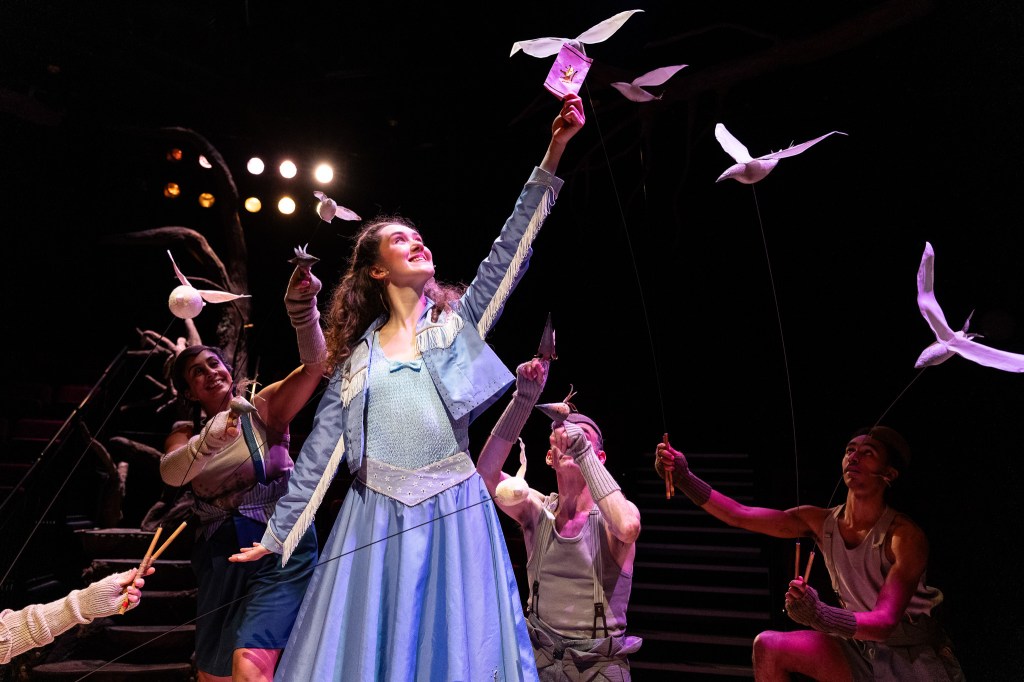
This version of Cinderella follows Ella, who finds solace in the woodlands after her father remarries into a family who mistreats her, forcing her to sleep among the cinders and carry out mundane, cruel tasks for their own enjoyment. Ella then meets the prince, a shy bird-lover who equally enjoys the escapism of the forest.
As mentioned, there are some absolute wins in this show. Katie Scott’s set design encompasses the space through the textures and colours of the woodland, while her costumes are whimsical and contrasting, reflecting the themes being explored. Charly Dunford’s lighting design assists in establishing the various moods, creating light and shade where necessary. Equally, Andy Graham’s sound design does a wonderful job of creating tension and unease during the darker moments of the piece, a standout scene involving the smashing of plates, very sinister.
The five-strong cast multi-role in this production, barely leaving the stage except for costume changes, some of which are carried out in plain sight to add to the magic of the piece. For this press performance, we had the pleasure of seeing off-stage swing Millicent Short step into the lead role, proving just how important our swings and understudies are in ensuring the show goes on. Short delivers an assured performance, full of confidence and dry wit.
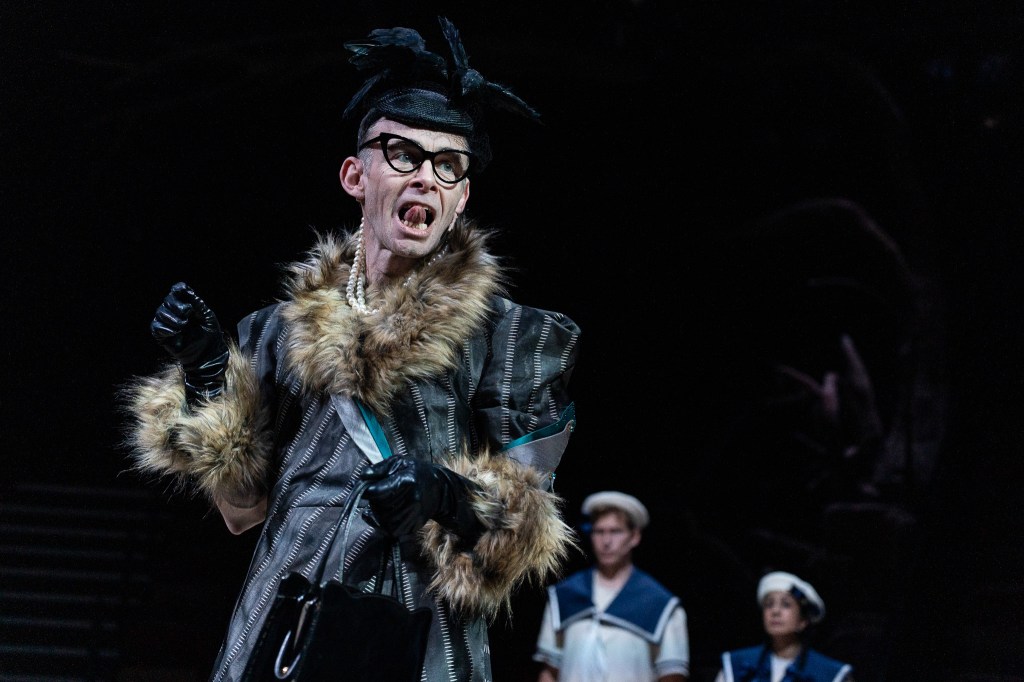
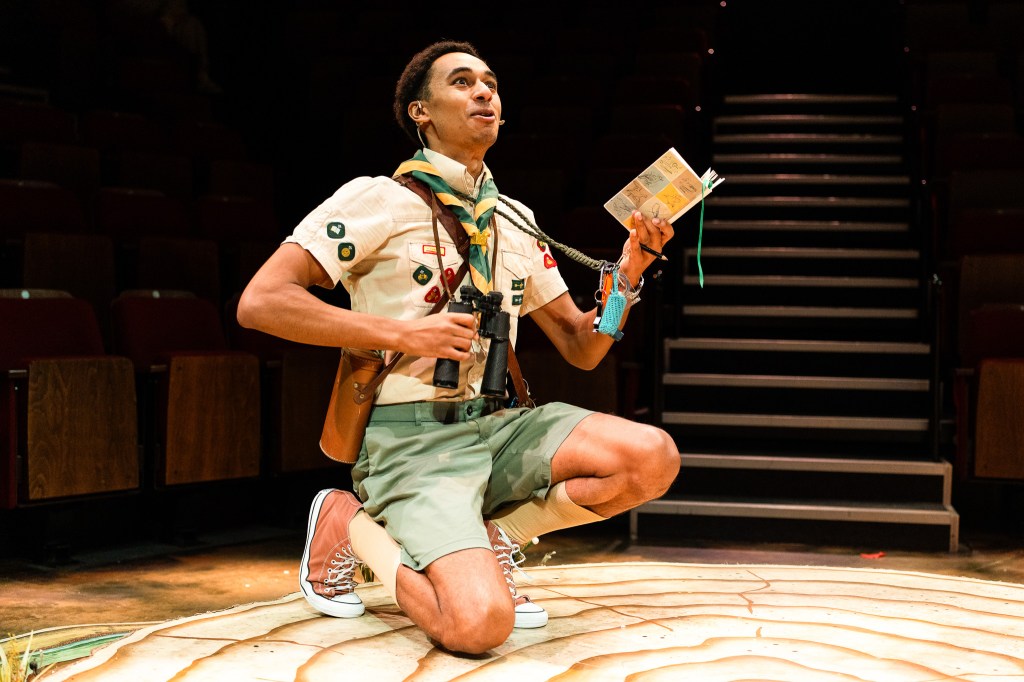
As the prince, Elliot Parchment-Morrison is vocally strong and demonstrates excellent comedic timing, particularly when the fourth wall is demolished and he finds himself in the audience practising his flirting… Michael Hugo as Mother is phenomenal. I must say, when I saw the production images prior to the performance, the close-up image made me somewhat dubious, particularly as there is no WHAM (wigs, hair and make-up) team for this show. However, Hugo proves that, irrespective of appearance, you can embody a character and steal the show. Mother is sadistic, manipulative and cold, something quite different from the usual family show villain. I was not mad about this at all.
In this telling, Ella has Brother and Sister, Mother’s children, who are both victims of their upbringing. Timothy Mylechreest and Purvi Parmar begin as Kubrick-esque siblings but gradually find their own paths as the show progresses. Their dynamic is tight, and both are a pleasure to watch.
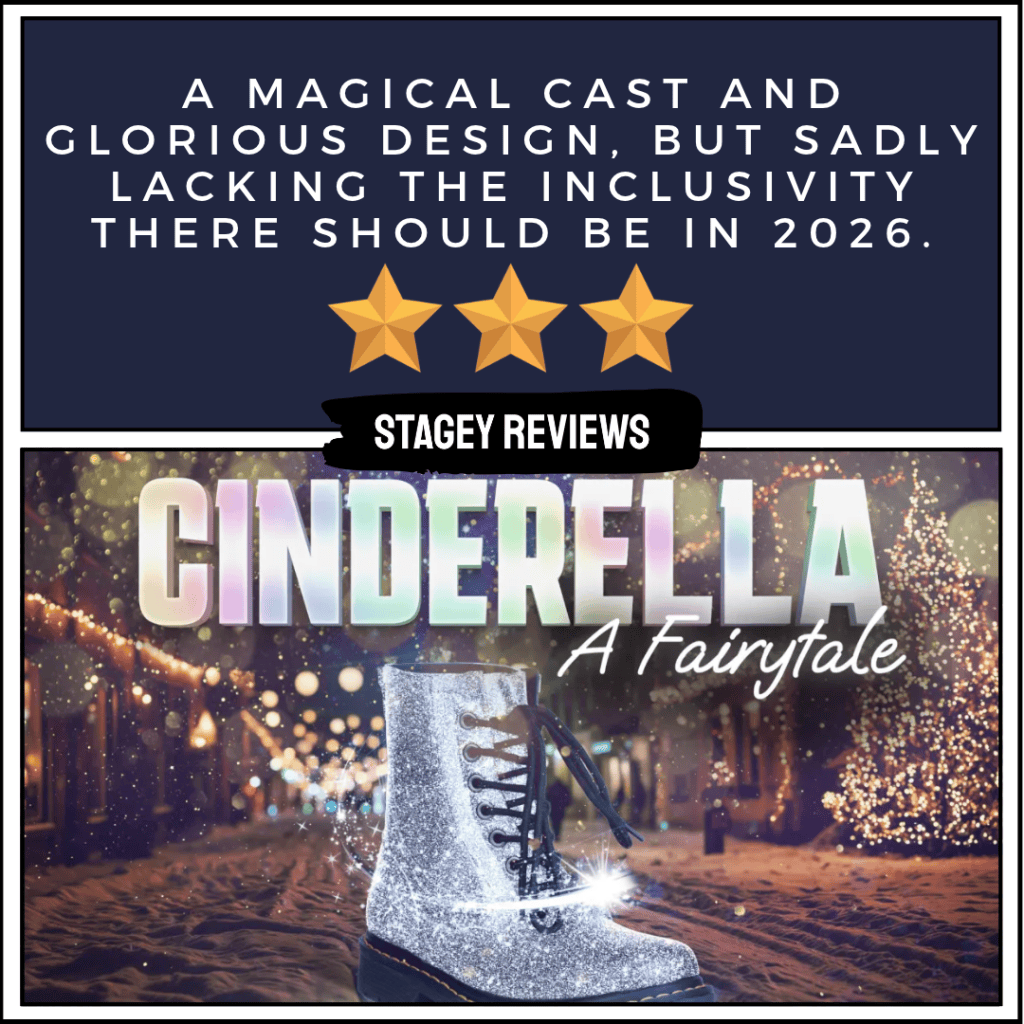
Inspiration from darker genres is frequent in this adaptation, with themes from Aschenputtel by the Brothers Grimm turning this fairy tale into a more violent affair. For a show with an age recommendation of 5+ and the content warnings currently listed on the website, I must disagree with this approach. Spoiler alert: we see Sister having her feet mutilated to fit the shoe and Mother having her eyes pecked out by Ella’s bird friends. I, for one, love a bit of horror, but for a family show at Christmas, particularly one whose poster features a glittery Dr. Martens boot, I think patrons may be a tad confused.
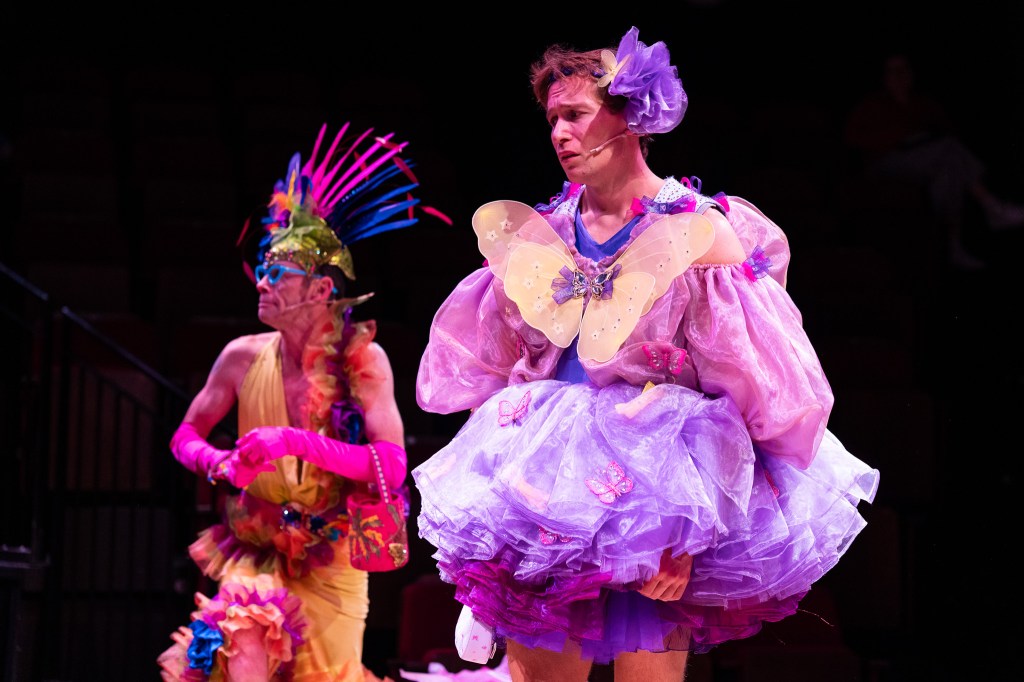
Interestingly enough, though, none of this is what made me feel uncomfortable. Now, for those who have never felt different or experienced being laughed at for not conforming to gender norms, it might be easy to brush this off or dismiss my concerns as being overly sensitive. However, one of the plotlines in this production involves Brother being forced to wear a dress to impress the prince. I cannot comment on how this is presented in the script, but the direction turns it into a running joke, seemingly designed to generate laughs from the audience.
This is 2026. Did the creative team consider how a young boy, coming to see Cinderella with their family and perhaps still navigating their own understanding of gender and identity, might feel watching a boy on stage being forced to wear a dress, with the entire theatre laughing at the absurdity of it? This is not a fleeting moment; it is an ongoing joke. I couldn’t help but feel heartbroken at the thought of a child witnessing this, particularly in a theatrical space where everyone, especially children, should feel safe, accepted and seen. It feels like a significant missed opportunity.
I have sat with this for a couple of days, trying to determine whether this is an issue with the writing or the direction, and in my opinion, it is the latter. Throughout, it feels as though everything has been thrown into the pot without anyone stepping back to consider whether it is simply too much. Sometimes, going back to basics and producing a cohesive piece of theatre is the best way to stand out from the crowd. Cinderella: A Fairy Tale has some genuinely wonderful elements, not least its performances and design, but they are ultimately overshadowed by creative decisions that feel at odds with the inclusive spirit a family production should embody.
Playing at Bolton’s Octagon until Saturday 9th January. Further information and booking details can be found here.
Tickets received in exchange for an honest review. #AD
Photography by Sam Taylor.

