

There’s perhaps no choreographer more adept at finding fresh possibilities in familiar stories than Matthew Bourne. With his trademark eye for theatrical detail, expressive movement and an instinct for turning the conventional on its head, Bourne has made a career of breathing new life into well-loved tales. His Cinderella, now returning for its 30th anniversary and arriving at Lowry, Salford, is no exception. Swapping pumpkin carriages and enchanted forests for the bomb-scarred streets of 1940s London, this is a darker, more human reimagining of the fairytale, where the magic of romance must compete with the very real horrors of war.
Opening with the ominous sounds of the Blitz, Bourne immediately establishes a world far removed from the traditional fairytale. Set against the backdrop of wartime London, the familiar story unfolds through a chance encounter between Cinderella (Hannah Kremer) and Harry (Rory Macleod), an RAF pilot. Their brief but transformative romance provides the emotional heart of the production, with the threat of separation and the fragility of life lending an altogether different weight to the familiar midnight deadline.
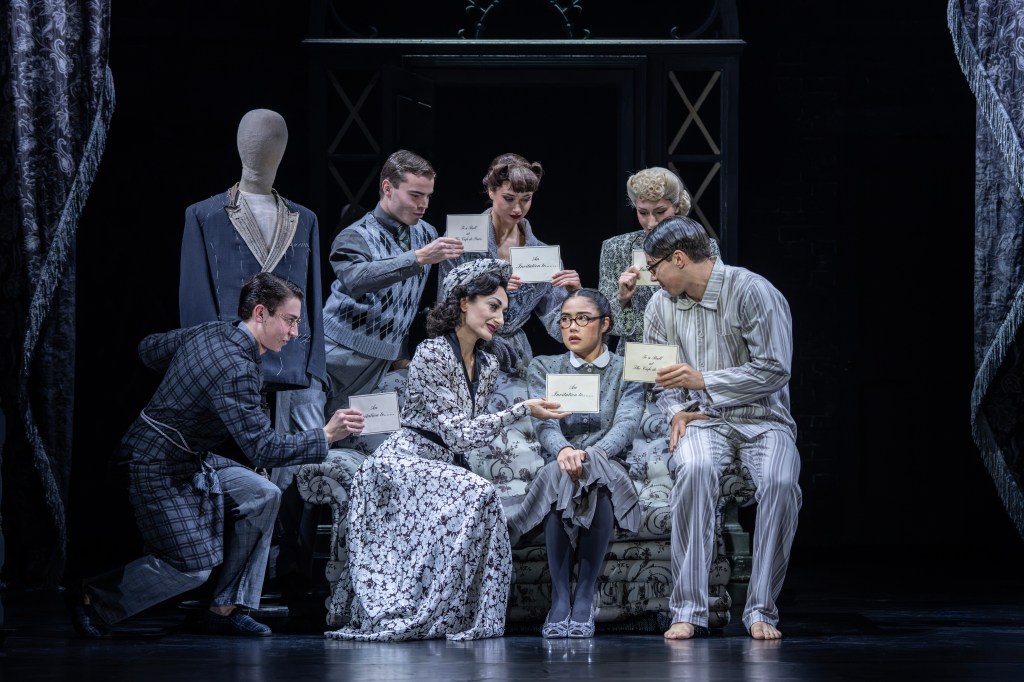
The production’s greatest strengths, however, often lie away from its central romance. The dysfunctional step-family provides some of the evening’s most entertaining moments, with the direction of this wonderfully grotesque household bringing a welcome injection of humour and theatrical mischief. Louis Harris is a particular delight as Elliott, one of the stepbrothers, finding plenty of comic personality in a character who could easily become little more than background noise. Alongside him, Michela Meazza makes a formidable Sybil. Her Stepmother is wonderfully calculating, commanding the household with an icy authority that makes Cinderella’s isolation all the more affecting. There’s a deliciously unpleasant dynamic between the family members, and Bourne clearly relishes exploring its absurdities.
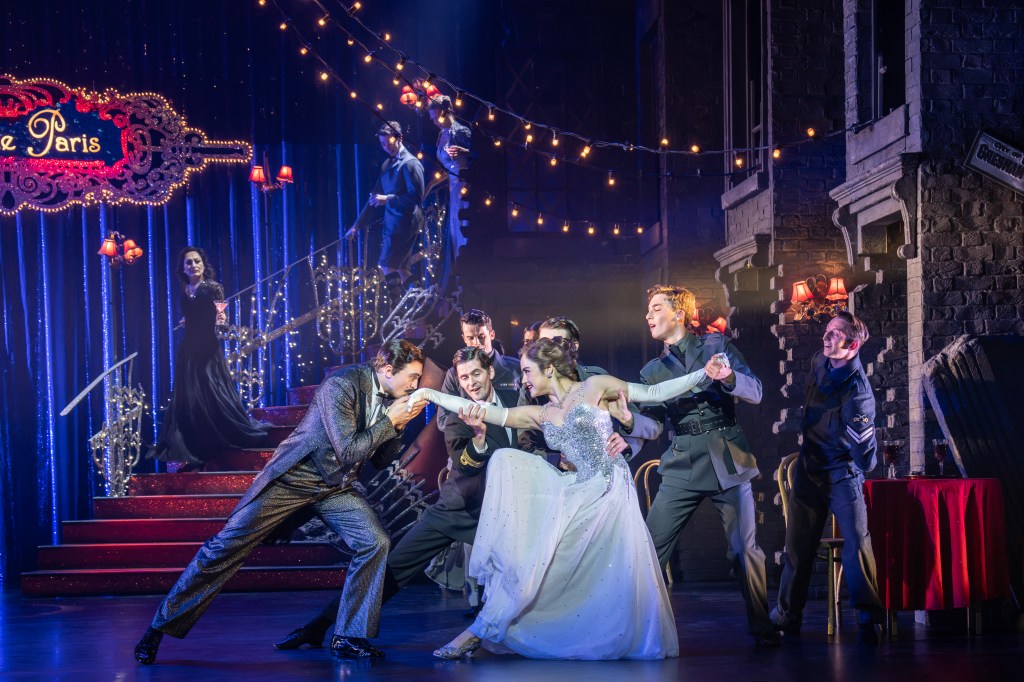
Visually, there’s much to admire. Lez Brotherston’s designs evoke the period with considerable style, while Neil Austin’s lighting and Duncan McLean’s projections help transport the audience between domestic interiors, glamorous social gatherings and the devastation of wartime London. Prokofiev’s magnificent score remains an essential ingredient, its sweeping romanticism providing a striking counterpoint to the destruction unfolding around the characters.
Yet, for all its technical accomplishment and inventive storytelling, this particular revival doesn’t always conjure the magic one might expect from Cinderella. Bourne’s wartime setting is an imaginative departure, but in exchanging the familiar fairytale trappings for something altogether more grounded, some of the wonder is inevitably lost. There are moments of real spectacle and visual beauty, but the production doesn’t always capture that sense of enchantment which makes this story so enduring. It’s an interesting reimagining rather than an entirely spellbinding one.
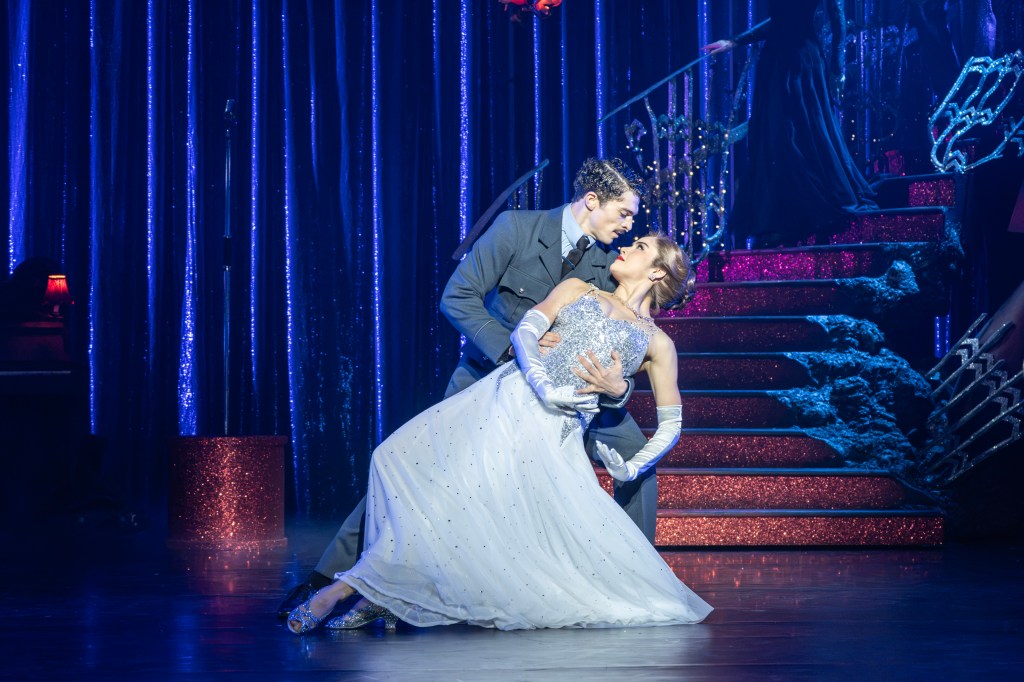
Nevertheless, there is much to celebrate in Bourne’s willingness to revisit a familiar story without simply reproducing its traditional trappings. This is Cinderella with its feet firmly planted in history, finding moments of tenderness, comedy and hope amid extraordinary circumstances. It may not conjure quite as much magic as its title suggests, but there is still plenty of theatrical alchemy at work in this handsome, imaginative and thoroughly entertaining reworking of a classic, even if this particular slice of Bibbity Bobbity Bourne doesn’t quite leave you spellbound.
Playing at Salford’s Lowry until Saturday 28th November, further information and booking details can be found here.
Tickets received in exchange for an honest review. #AD
Photography by Johan Persson.

