

At Manchester’s Palace Theatre, Waitress arrives with all the warmth of a freshly baked pie. Directed by Diane Paulus with a light but emotionally attentive touch, this production understands the delicate balance at the heart of Sara Bareilles’ score: comfort food with a sharp edge.
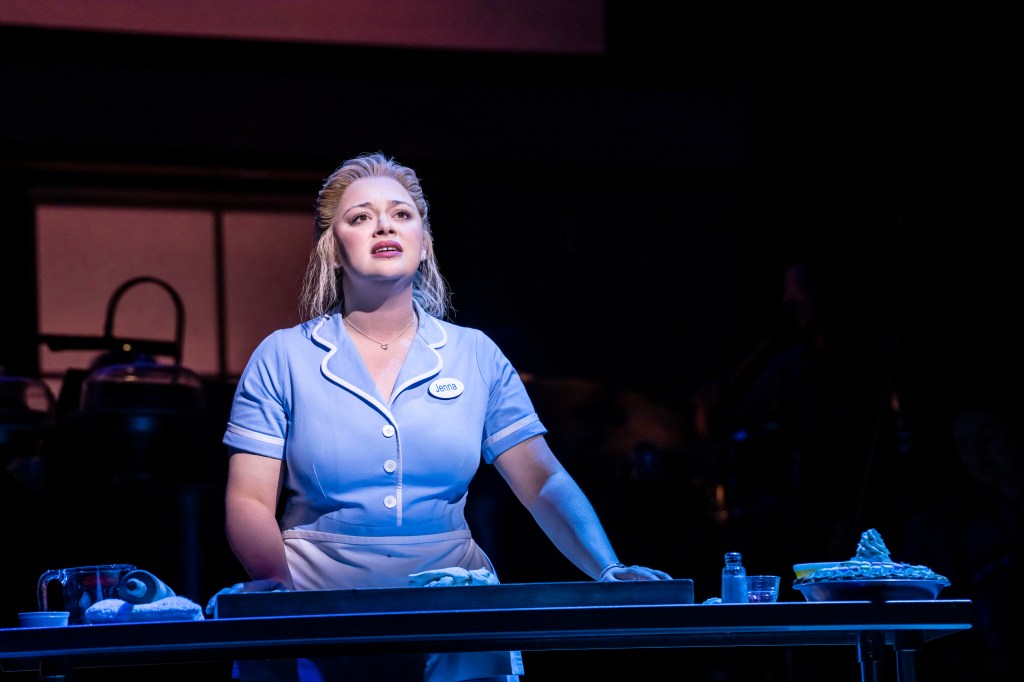
At the centre is Carrie Hope Fletcher as Jenna, the expert pie-maker trapped in a joyless marriage and drifting through life with exhaustion stitched into every smile. Fletcher has always possessed vocal precision, but here she brings something far more compelling: a bruised honesty. Her Jenna feels genuinely worn down by routine, by compromise, by the slow erosion of self-worth. The performance is stripped of theatrical polish in exactly the right way; there is a graininess to the performance that makes the character’s inner conflict feel immediate rather than manufactured. What Fletcher captures best is Jenna’s reluctance to hope. Too often the role is played with an inevitable sense of liberation waiting around the corner; here, freedom feels uncertain and frightening. That realism gives the production its emotional core. By the time the show reaches its closing moments, the audience has earned its uplift rather than simply being handed it.
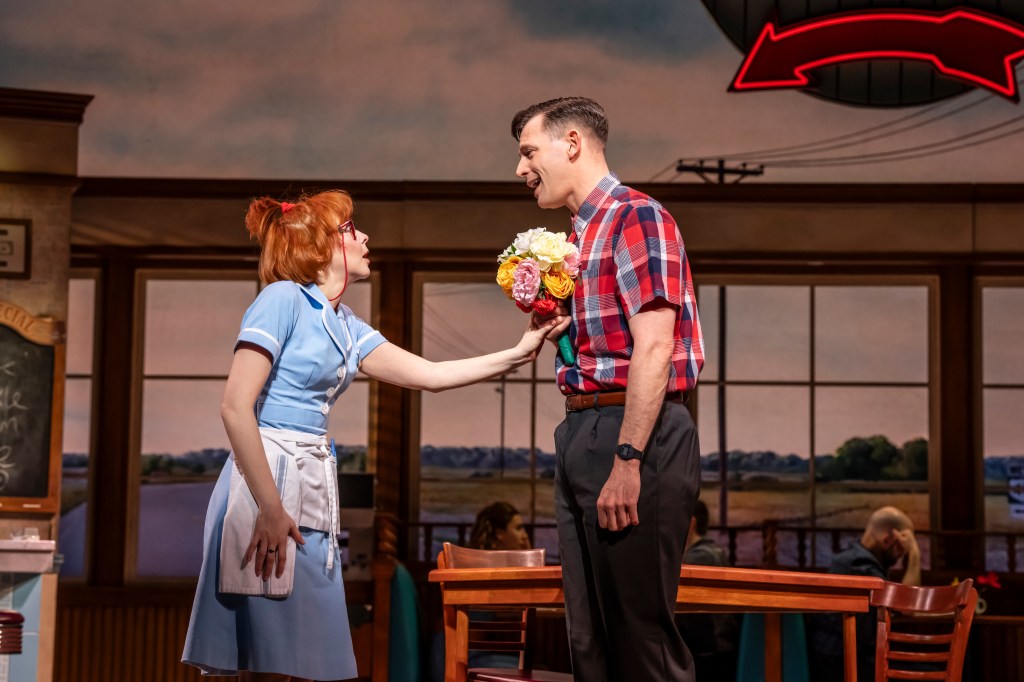
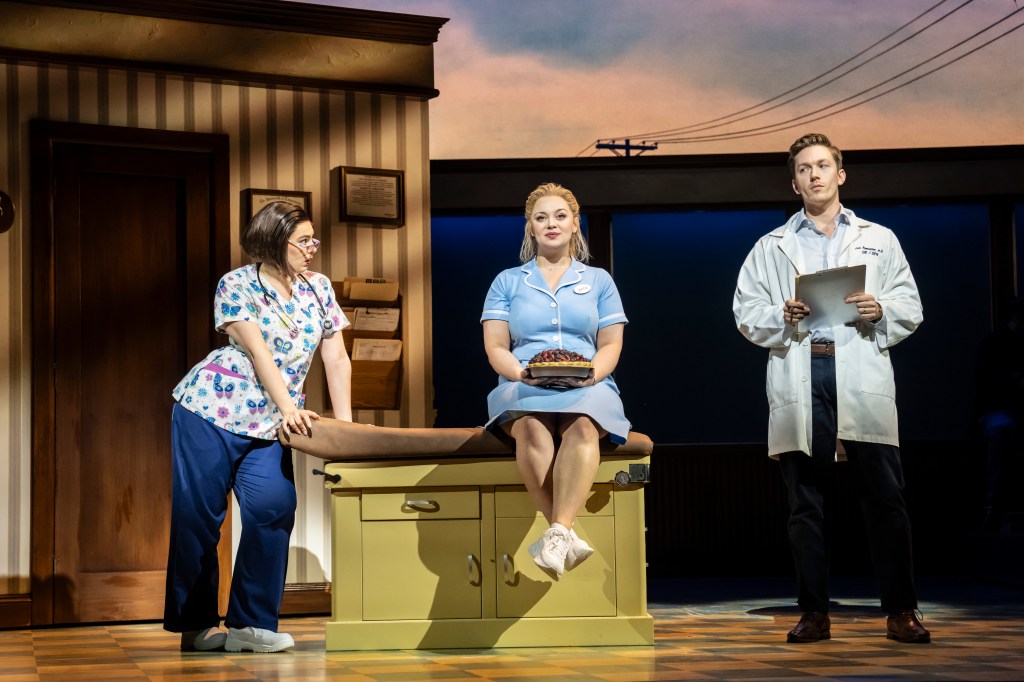
The supporting cast bring warmth and energy throughout. Sandra Marvin gives Becky plenty of humour and heart, while Evelyn Hoskins makes Dawn wonderfully awkward without overbaking her. There is strong comic work elsewhere, too. Mark Anderson throws himself fully into Ogie’s eccentric energy, while Ellie Ruiz Rodriguez earns some of the biggest laughs of the night as Nurse Norma. Dan Partridge gives Dr Pomatter an easy charm that fits well alongside Fletcher’s more grounded performance; their chemistry is immediate.
Visually, the production leans into Americana without drowning in nostalgia. Scott Pask’s diner set glows with soft neon warmth (thanks to Ken Billington’s Lighting Design) while keeping enough functional realism to remind us that this is a workplace, not a fantasy. The design team wisely resist the temptation to over-style the material, allowing Bareilles’ music and Jessie Nelson’s book room to breathe.
And the score remains irresistible. Bareilles writes melodies that slip effortlessly between pop balladry and musical theatre storytelling, often within the same number. The songs do not merely decorate the action; they expose emotional truths the characters are unable to articulate aloud- punctuated with Lorin Latarro’s subtle yet skilful choreography. ‘She Used to Be Mine’ arrives not as a showstopping performance engineered for applause, but as a moment of painful self-recognition. Fletcher delivers it with devastating restraint, refusing easy melodrama.
There are, however, moments where the production’s softer edges blunt the darker aspects of the story, particularly in its treatment of emotional abuse. Occasionally, it drifts towards sentimentality, though the sincerity of the performances here are enough to keep things grounded- so long as you don’t think too long or hard about it.
What makes this production linger, though, is its compassion. Waitress remains a show about ordinary people quietly trying to survive disappointment while searching for fragments of happiness where they can find them. Here, that humanity rises beautifully.
Waitress plays at Manchester’s Palace Theatre until Saturday 30th May. Further information and booking details can be found here.
Tickets received in exchange for an honest review. #AD
Photography by Johan Persson.

