
There can be few more enduring stories of young love than Shakespeare’s Romeo and Juliet, but translating its tragedy into dance requires more than exquisite technique and a sweeping score. English National Ballet’s revival of Rudolf Nureyev’s celebrated production delivers plenty of both, with a lavish visual world and a Juliet who proves to be its beating heart.
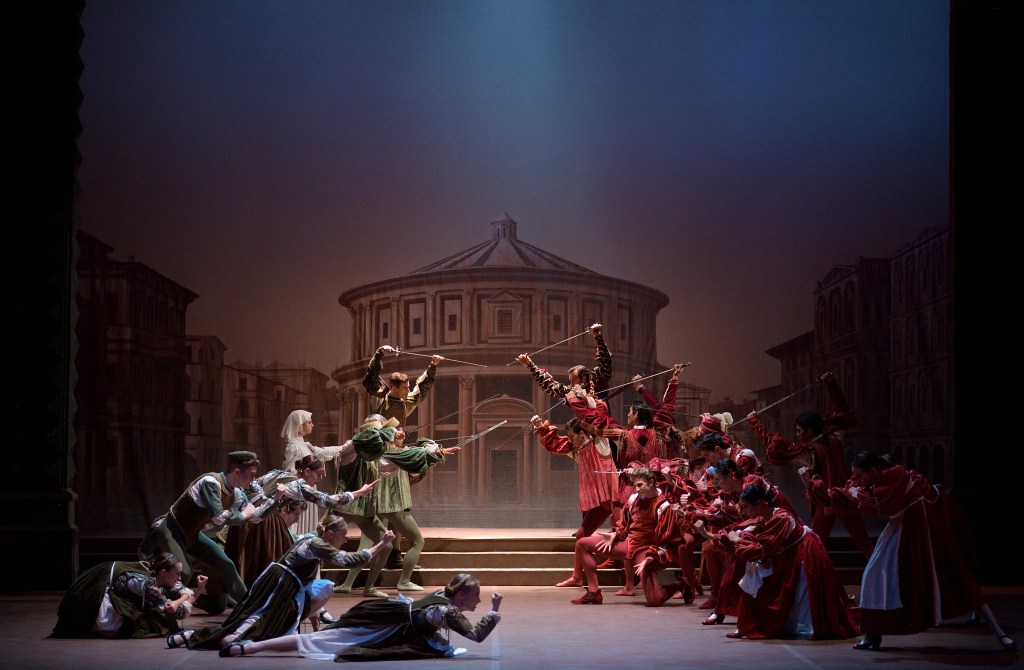
Before arriving here at Manchester’s Palace Theatre, Nureyev’s production first premiered in 1977, created for the London Festival Ballet (now English National Ballet), with Sergei Prokofiev’s music providing its dramatic backbone. Prokofiev composed the ballet in the 1930s, initially encountering difficulties getting his score staged in the Soviet Union before its eventual premiere in Brno in 1938. Nureyev’s interpretation, with its intricate choreography and emphasis on the psychological tensions beneath Shakespeare’s story, has become a landmark of the classical repertoire.
The production’s sumptuousness is immediately apparent. Nureyev’s expansive storytelling gives the world of Verona considerable texture and there is grandeur aplenty. Ezio Frigerio’s sets and Franca Squarciapino’s costumes evoke a Renaissance Verona alive with political rivalry, social ritual and simmering violence. The bustling public scenes offer a convincing sense of a city in which private passions are inseparable from public conflict; there’s a pleasing contrast between the grandeur of the world surrounding the lovers and the intimacy of their most tender encounters.
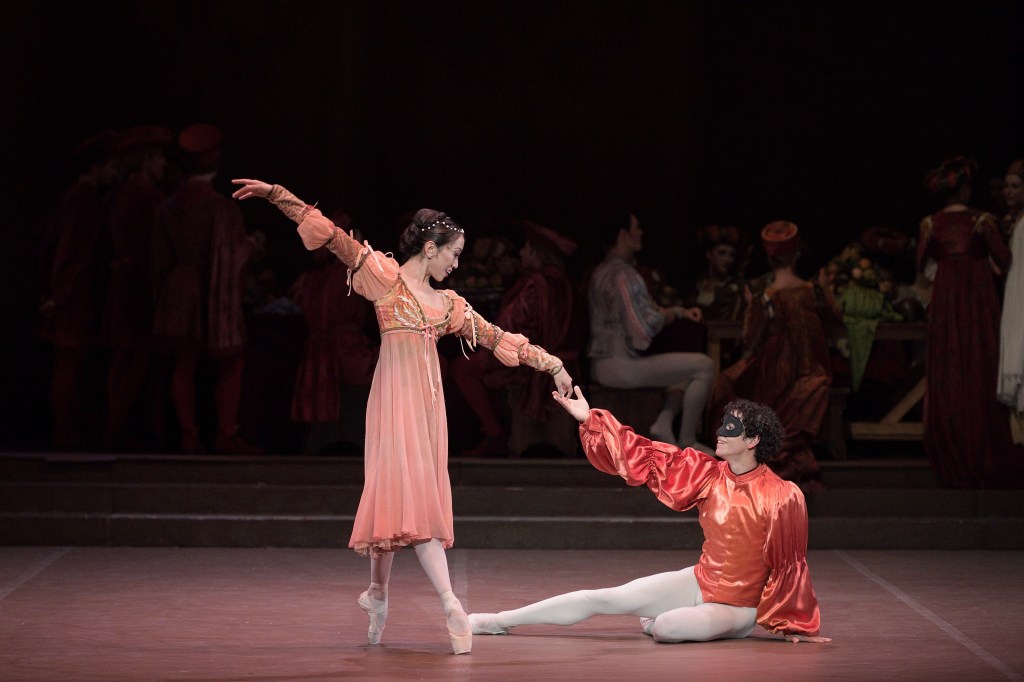
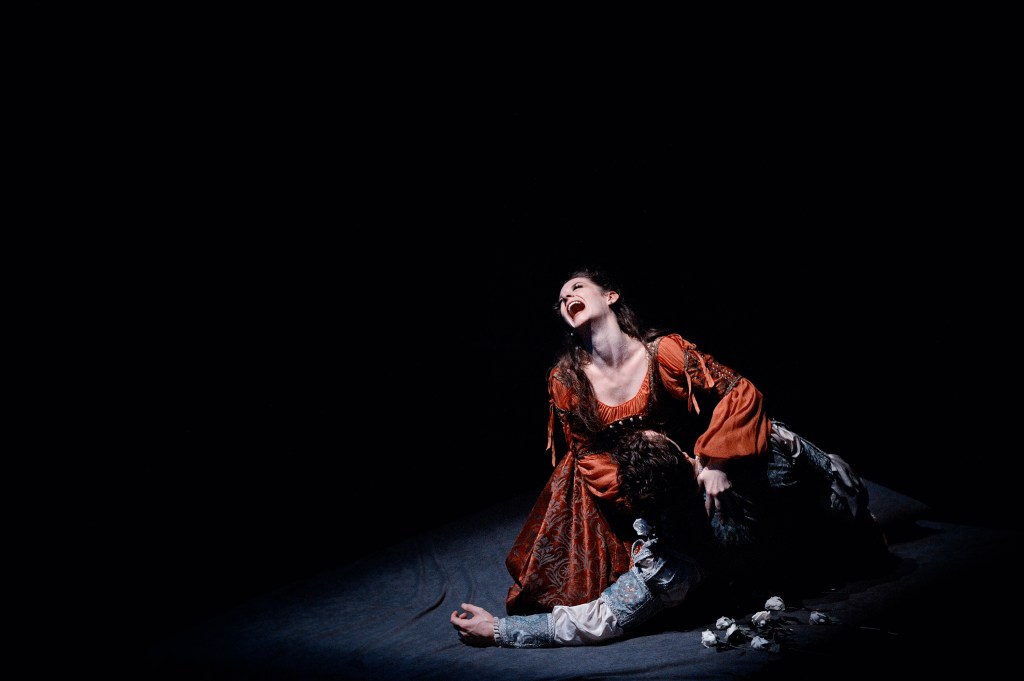
Julia Conway is the evening’s outstanding performer. Her Juliet possesses a freshness and emotional openness that make the character’s transformation from sheltered adolescent to determined young woman genuinely compelling. Conway combines delicacy with an impressive physical confidence, finding expressive detail in the choreography without sacrificing its technical demands. Her movements communicate curiosity, exhilaration and, ultimately, devastating vulnerability. Early on, she gives the romance a sense of spontaneous discovery; later, the growing desperation in her performance lends the tragedy its greatest emotional force.
Rentaro Nakaaki’s Romeo offers a strong physical presence, and the central pas de deux contain moments of real beauty. However, the characterisation generally can feel less secure. Some crucial confrontations lack the psychological clarity needed to make the sudden shifts from youthful exuberance to murderous rage and unbearable grief entirely believable. The immaculate steps tell us what the characters are feeling, but the performers don’t always make us feel it.
Still, the English National Ballet Philharmonic makes a powerful case for Prokofiev’s score, moving from playful exuberance to richly coloured menace and heartbreak. The orchestra gives the evening both propulsion and emotional weight.
This remains a visually ravishing, musically sumptuous evening, elevated by some incredible talent. The tragedy may not always land with the force it should, but when the production finds its emotional centre, its beauty is undeniable.
Romeo & Juliet plays at The Palace Theatre in Manchester until Sunday 25th October. Further information and booking details can be found here.
Tickets received in exchange for an honest review. #AD
Photography by Laurent Liotardo.

