

Twenty-six years after it first scandalised and seduced audiences, Matthew Bourne’s The Car Man arrives at Salford’s Lowry with its pedal to the metal. Returning to the stage as part of its first UK tour in over a decade, this dance-theatre thriller remains one of Bourne’s most daring creations: part ballet, part film noir, part fever dream.
Inspired loosely by Bizet’s Carmen, the action is relocated from a Spanish cigarette factory to Harmony, a dusty Midwestern town dominated by a garage and diner in the 1950s. Into this simmering community drifts a handsome stranger, and from that moment the temperature only rises. Desire, jealousy and ambition spread through the town like a dropped match in a fuel station.
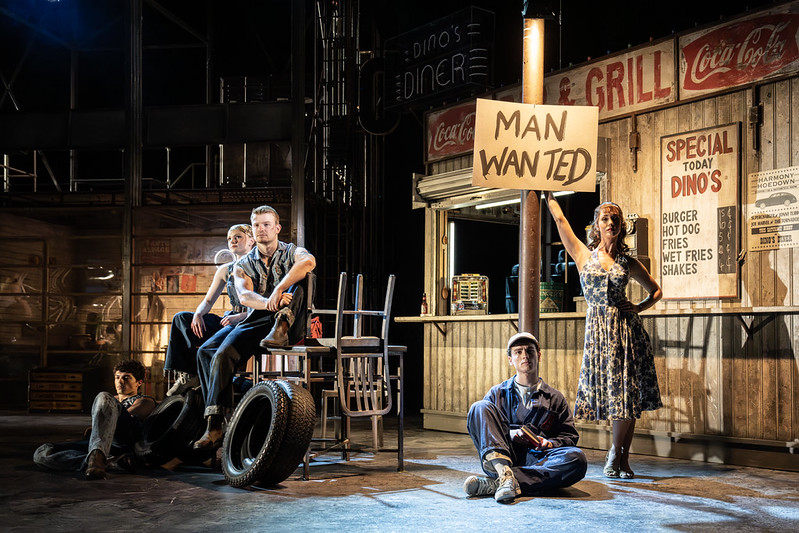
What makes The Car Man endure is Bourne’s confidence as a storyteller. Dance is never merely decorative here; every movement pushes the narrative forward. A glance across a diner counter, a hand lingering too long on a shoulder, a sudden burst of violence; each is delivered with cinematic edge. You don’t need to know a plié from a pirouette to follow the plot and Bourne understands that audiences crave story as much as spectacle.
As ever with Bourne’s work, there are no passengers. The leads may command the eye, bringing charisma, danger and emotional complexity to their roles, but the production’s real achievement lies in its sense of community. Every member of the company appears fully invested in the life of Harmony, creating a vivid small-town ecosystem where gossip, lust and suspicion circulate constantly beneath the surface. Ensemble scenes crackle with detail, whether in the bustle of the diner or the charged physicality of the dance sequences. It is this collective precision that allows the bigger dramatic moments to land with such force; when Harmony finally tears itself apart, it feels like the collapse of a world rather than simply the downfall of a few individuals.
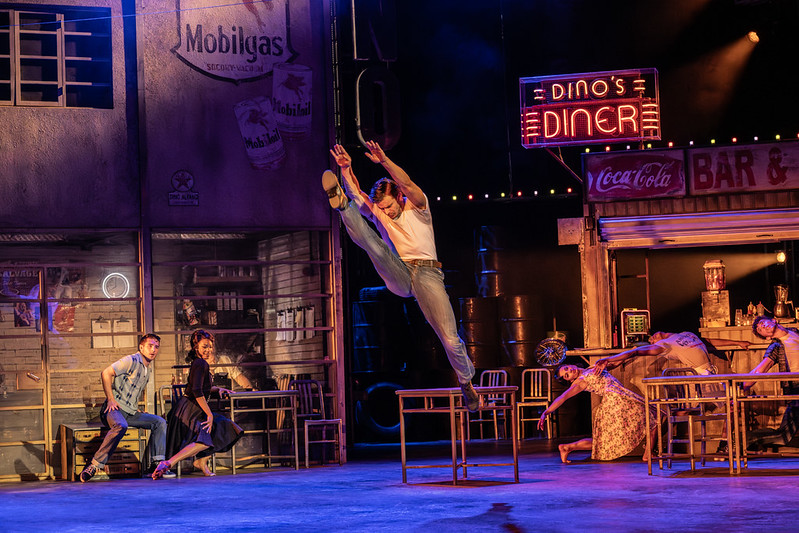
Lez Brotherston’s design remains wonderfully evocative, conjuring a stifling America that feels lifted from a half-remembered Hollywood thriller. The garage, diner and surrounding town become a pressure cooker where everyone seems trapped by circumstance and longing. Chris Davey’s lighting paints the stage in smoky shadows and blazing heat, while Paul Groothuis’s sound design ensures dramatic beats land with impact.
The score, adapted by Terry Davies from Rodion Shchedrin’s reworking of Bizet’s Carmen, remains a character in its own right. Familiar melodies emerge and disappear beneath surging rhythms and sharp orchestral punches, propelling the action forward with relentless momentum.
There are moments where the storytelling occasionally threatens to tip into melodrama. Bourne has never been afraid of excess, and some plot twists arrive with the subtlety of a sledgehammer. Yet restraint could arguably undermine the show’s appeal. This is dance theatre with its sleeves rolled up and its shirt buttons undone. It wants to shock, excite and entertain in equal measure.
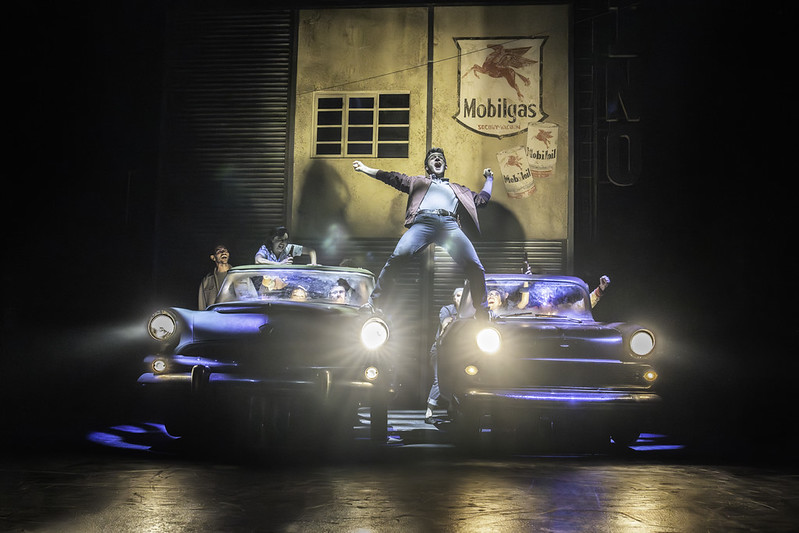
Most impressive is how modern the work still feels. When it premiered in 2000, its fluid treatment of sexuality and morally ambiguous central figures felt provocative. Today, those themes feel woven naturally into the story rather than presented as statements.
By the final scenes, as betrayals accumulate and the town of Harmony descends into chaos, the audience at The Lowry sits visibly gripped. Bourne’s gift has always been making dance accessible without diluting its artistry, and The Car Man is a clear example of that talent.
It may not quite achieve the emotional depth of Bourne’s very finest work, but this revival proves the engine is still running beautifully. Sexy, stylish and deliciously sinister, The Car Man continues to leave tyre marks across the dance-theatre landscape.
The Car Man plays at Lowry in Salford until Saturday 27th June. Further information and booking details can be found here.
Tickets received in exchange for an honest review. #AD
Photography by Johan Persson

