

There’s something inherently appealing about Barnum. A musical about the balancing act of success, ambition and showmanship should, in theory, feel right at home in a large touring venue like Manchester’s Palace Theatre. This 2026 UK tour certainly brings energy, elements of polish and a hard-working cast- yet it never quite manages to turn the spectacle of the big top into something with real dramatic weight.
At the heart of the issue is Mark Bramble’s book; that tells the story of P.T. Barnum, the legendary 19th century showman and entrepreneur whose flair for spectacle helped shape modern entertainment. Here we follow Barnum’s rise from small-time promoter to cofounder of what eventually became the “Greatest Show on Earth.” Ultimately, things feel a little stunted. Characters appear, make an impression, and then are ushered aside before they have the chance to grow. The show’s framing device- with a Ring Master guiding us through Barnum’s life- signposts the narrative clearly enough but also exposes its weaknesses. Without those constant nudges, the timeline is an overambitious stretch for a relatively short runtime. The story moves quickly, but rarely fluidly. Watching Barnum in 2026, it’s difficult not to draw comparisons with The Greatest Showman. While the latter has its own flaws, it understands the value of emotional momentum. This production, by contrast, often feels like a sequence of well-executed moments searching for a connecting thread.
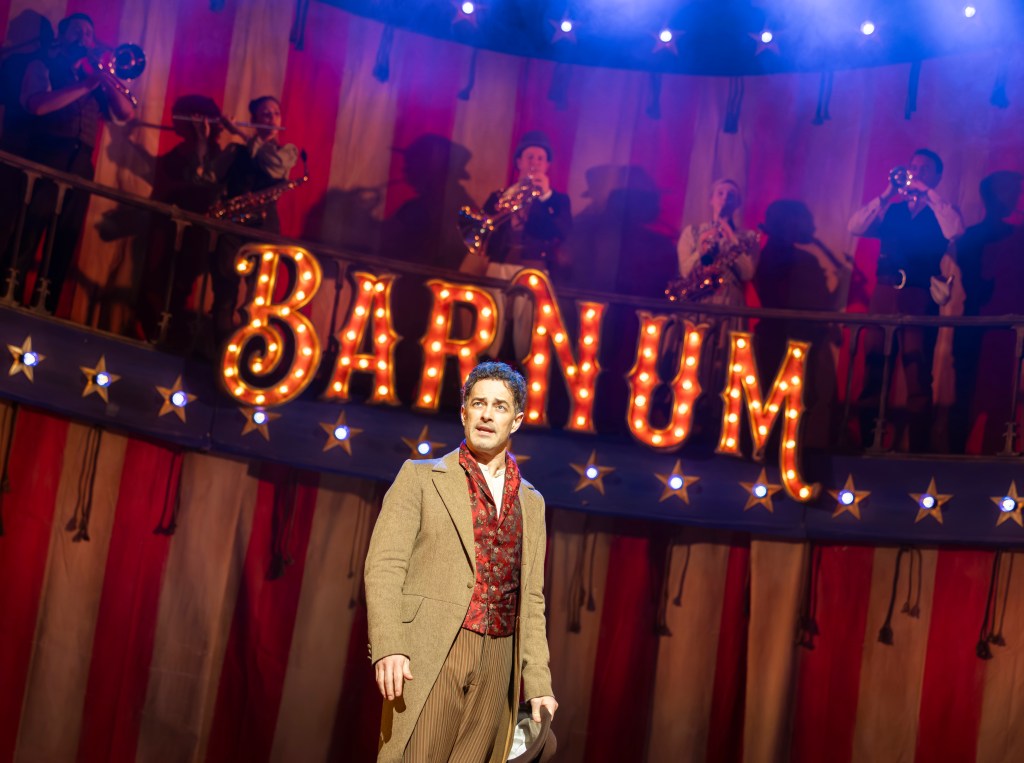
The cast, a company of mostly actor-musicians, work relentlessly. When it clicks- particularly in ‘Come Follow the Band’- the effect is joyous, messy in the best possible way, and entirely in keeping with Barnum’s chaotic vision. Elsewhere, the concept starts to feel overworked. There are moments when the stage resembles a particularly earnest music department, with instruments everywhere and focus in short supply. Tellingly, the score often shines brightest when it’s pared back, allowing a piano or harp to do the emotional heavy lifting without competition.
There are, however, flashes of real theatrical beauty; Jai Morjaria’s Lighting Design is effective with its brash, Vaudeville-esque border lights, but is particularly effectual when framing quieter, more poignant moments with sensitivity and restraint. These glimpses of stillness hint at the emotional depth the show might have achieved had it trusted its material more.
Circus elements (directed by Amy Panter), meanwhile, are a double-edged sword. They’re skilfully performed and undeniably impressive, but appear with such regularity that their impact diminishes. It all begins to feel predictable; spectacle, it seems, is deployed habitually, quickly losing its thrill-factor.
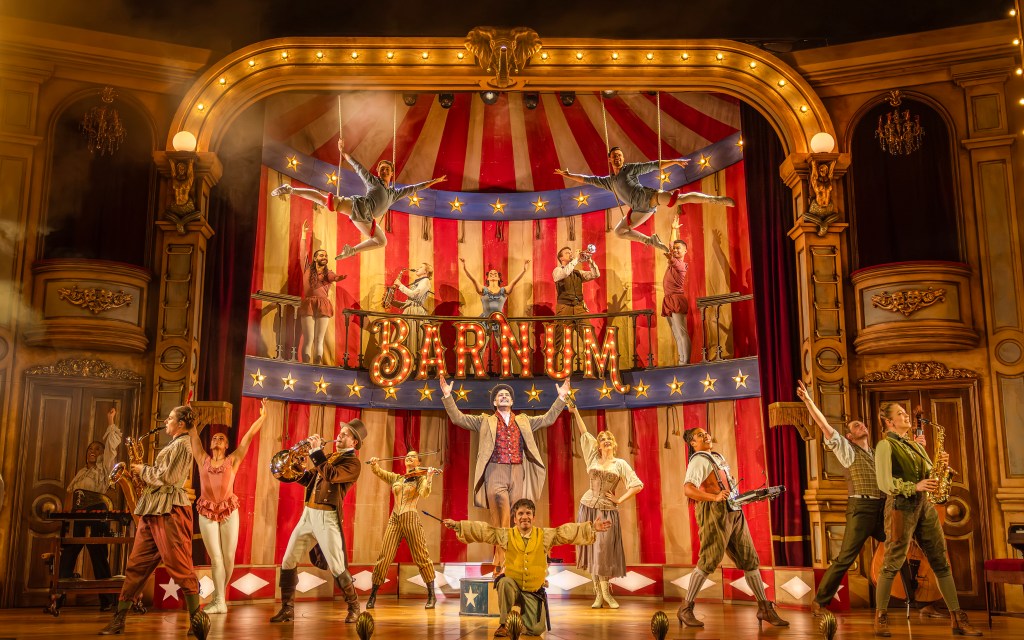
Choreographically, the show never quite finds its footing. In a limited space with a relatively small dancing cast, Oti Mabuse’s movement often feels underdeveloped- though its promise on a larger scale is undeniable. Sound Design from Tom Marshall also lacks the punch needed to elevate the score’s biggest moments; several numbers cry out for more swell, more lift, more sense of release, appealing as they may be.
At the centre of it all, Lee Mead brings moments of warmth and charisma to Barnum himself, reminding you why the role endures, though strong supporting performances do heavy lifting to help keep the plates spinning- a real standout being the sublime Penny Ashmore as fleeting love-interest and esteemed opera star, Jenny Lind.
All in all, Barnum remains an entertaining evening, full of colour and effort, but it never quite becomes the great show it promises. You leave with a smile, yes- but I can’t help wishing the story had dared to dig a little deeper to keep this balancing act from becoming too wobbly.
Barnum plays at Manchester’s Palace Theatre until Saturday 14th February. Further information and booking details can be found here.
Tickets received in exchange for a review. #AD
Photography by Pamela Raith.
 Stagey Reviews