

Playwright, Arthur Miller, is often deemed as one of the great writers of the 20th century, with Death of a Salesman described as “his masterpiece”- winning the Pullitzer Prize for Drama and Tony Award for best play in 1949. It has been revived countless times over the last eight decades, but how does director, Andy Arnold’s iteration compare?
The play tells of Willy Loman (David Hayman), who returns home from travelling in the middle of the night and, in what was unconventional at the time of writing, looks back at his life and often blurs the lines of reality and disillusion and gives the audience a more pragmatic approach to the ‘American Dream’.
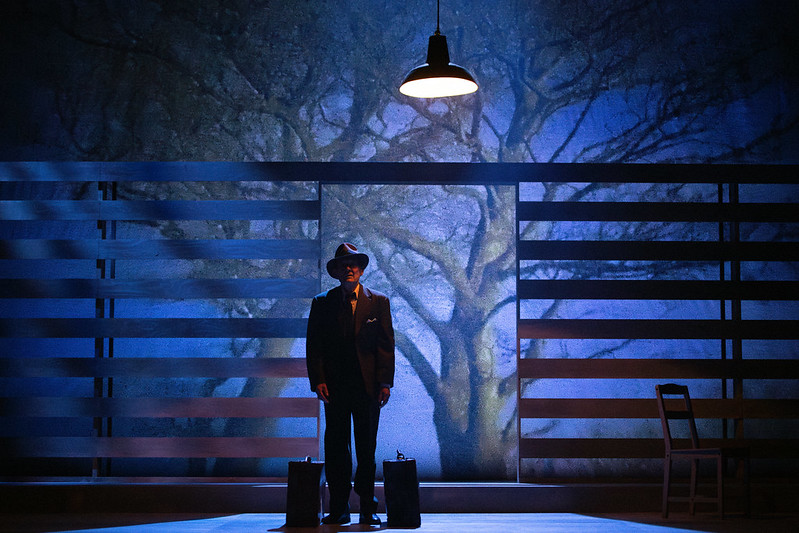
With timeless themes and compelling character dynamics, Death of a Salesman should be a resounding success, but whether due to an overly thought-out direction resulting in a lack of naturalism, or the lengthy run time (even being abridged at Lowry), this production lacks the engagement Miller’s work deserves.
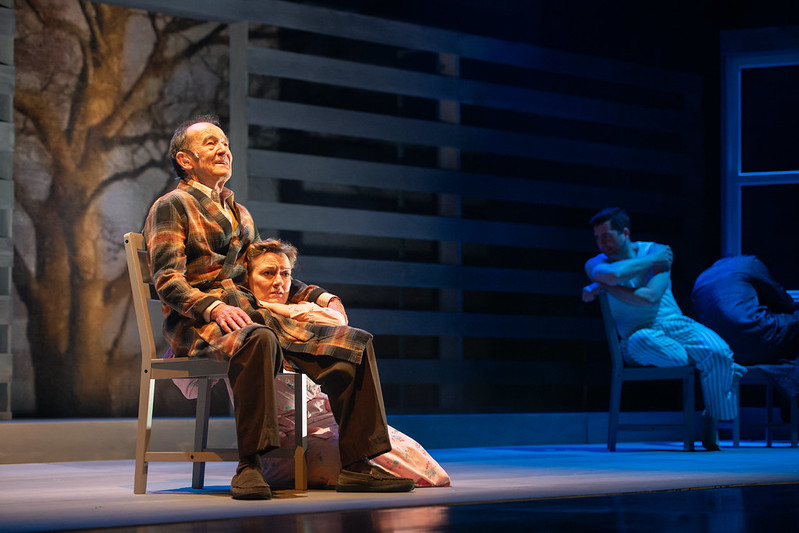
Taking a Brechtian approach to staging, the cast are sat on wooden chairs watching the narrative unfold with the audience, which can be argued is a decision to add to the oppression and claustrophobic nature of Neil Haynes’ set design. Sadly, the result looks cluttered and distracts from the lengthy and often one-note dialogue. On occasion, it breaks the fourth wall, which again Brecht is known for, but it pops the realist bubble and drags the audience out of the narrative. Likewise, the use of wooden chairs as props being dragged from the side and back seemed more like a means to an end as opposed to an abstract notion. The wooden shell of the Loman’s home enveloped in the middle of the neighbouring metal structures is effective, but again, this is detracted by the cloth backdrop rippling each time someone moves near it (or runs behind).
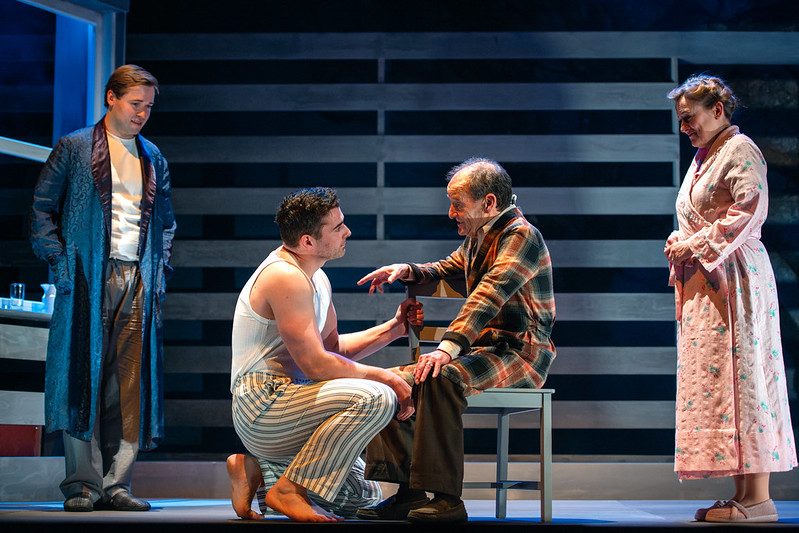
Hayman is at his best during the present scenes where Willy is subtly breaking down, however there isn’t enough contrast in the ‘flashback’ or ‘memory’ scenes for the role to soar against the understated performance of the present. Whether a stylistic choice or just an off day, there is overstepping of lines between Willy and wife, Linda (Beth Marshall). This could be strengthened through use of an intimacy director to further aid the naturalism this play requires and to achieve an even tone throughout.
Daniel Cahill, on the other hand, gives a magnetic and powerful performance as Biff, Willy’s eldest son and is a standout in the production. He has a differing dynamic with each of the cast, showing his understanding of the complexities of the character.

Overall, it would be difficult to make Miller’s work a poor watch, especially given the timeless themes (particularly given the current affairs in the USA) but, unfortunately, this production is confused between abstract and naturalist and only average at best.
Death of a Salesman runs at Lowry until Saturday 3rd May. Further information and booking can be found here.
Tickets gifted in exchange for an honest review.
Photography by Tommy Ga Ken-Wan.
 Stagey Reviews
Leave a comment