
As a relative newcomer to the world of traditional ballet, I welcomed the invitation to the prestigious English National Ballet’s production of Mary Skeaping’s 1971 mounting of Giselle. A sad and ghostly tale dating back to the 1840s, and from a romanticist standpoint, the plot contains all of the melodrama one might come to expect from such a time: love, betrayal, death and redemption, to name but some.

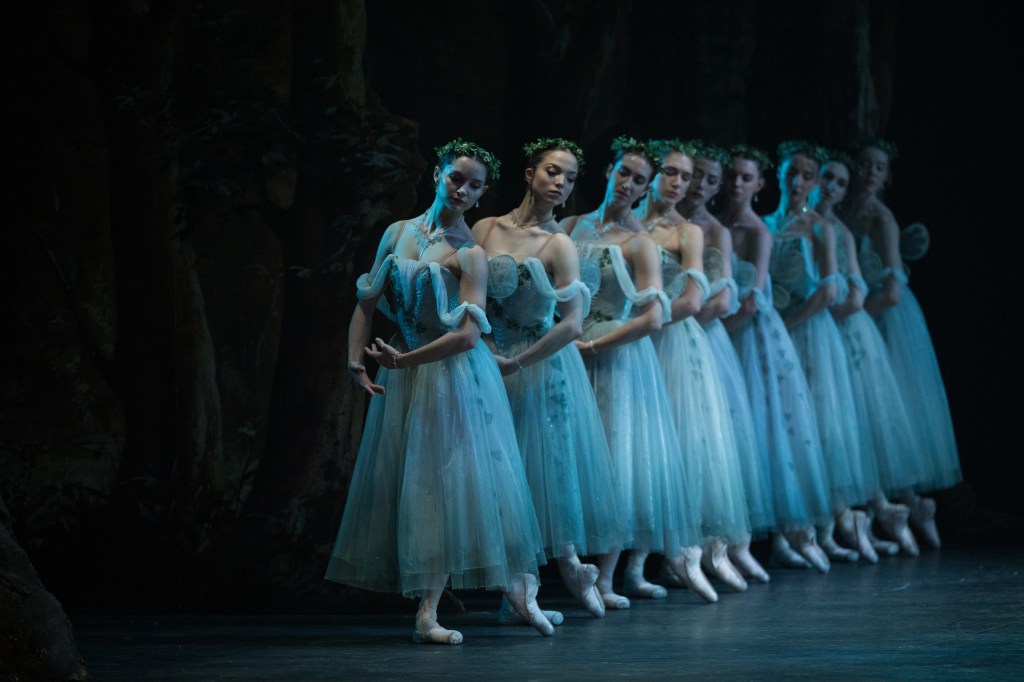
In a world where production value is often at the forefront of directorial choices, it is somewhat refreshing for a rousing orchestra to strike up composer Adolphe Adam’s classic score- before the grandiose velvet curtain lifts to reveal a rich but simple set. Tonally apt (especially for the time of year), autumnal scenery frames a small Rhineland village, who are celebrating their annual wine festival. Plot-wise, there are few frills. Whilst it has its benefits, it does sometimes leave one contemplating if this traditional tale could use a little spicing up by way of sub-plot- though this could just be the year 2024 talking. In this most faithfully authentic of versions, there are little to no distractions from the story-telling, driven by a beautiful blend of dance and mime. It’s evident that the cliché is right there; it’s practically in touching distance; yet the emotional investment of the entire company casts such a convincing spell of realism that it never steps into it. Even with its brazen second act foray into the supernatural (cutting in its contrast to the whimsy of Act 1), this unexpected narrative journey leads us to the production highlights that are ‘The Wilis’- the friendly face of evil, veiled brides who died before their wedding day, broken-hearted and restless in their graves. Aided by simplistic yet effective lighting design (originally by Charles Bristowe and recreated by David Mohr), the troupe, led superbly in her debut role by Julia Conway as Myrtha- Queen of the Wilis, transcend. None of this should work- yet, somehow, it does. (Although I definitely missed some of the more in-depth details which proved to be invaluably printed in the programme…)
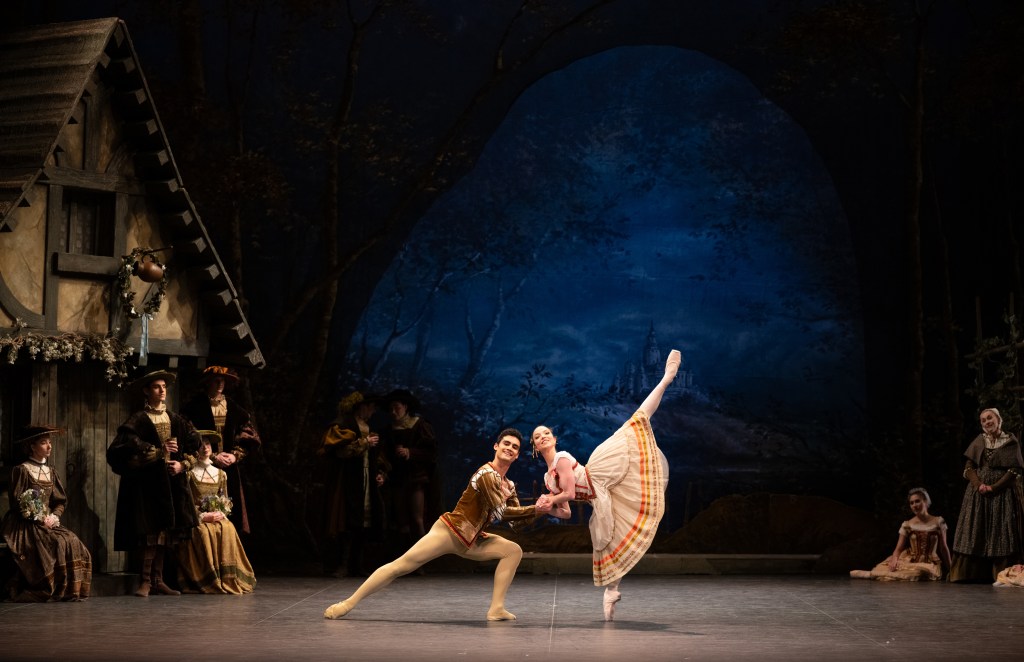
As Giselle, English National Ballet veteran, Erina Takahashi embodies the character holistically. A peasant girl, sickly and ultimately betrayed by her double-crossing aristocrat love, Albrecht (danced wonderfully by Francesco Gabriele Frola.) Takahashi’s Giselle is multi-layered: sweet and innocent, wild and crazed, confident yet vulnerable. Her interpretation of the original choreography is bolstered by mastery-level technique, phenomenal talent: and you are left as a puppet on her string, watching on, transfixed, as she gently and fluidly dances her role with seeming ease.
Simplicity is the key, here. What’s done is done expertly well and is executed almost to perfection. As much as I try to see past dated set design, I can’t help but feel a small sense of missed opportunity to truly immerse the audience in every aspect. This being said, when you’re presented with a company comprised of this much talent, if you’re not looking at them, you’re missing out on something special.
This production runs at The Palace until Saturday 2nd November. Further information and booking details can be found here.
Tickets gifted in exchange for an honest review.
Photography by Laurent Liotardo.
 Stagey Reviews
Leave a comment